728*90

Sunday, March 9, 2014

10 Days on the bike


OK, not constantly on the bike for 10 days - I have ridden every day in the last 10 days. During that period I logged in 193 miles. One of the days I only rode 3.5 miles - during trail work. The rest of that day was shooting the cyclocross race at Swanson.
Its harvest season in the heartland. With wall-2-wall sunshine for the last 2 weeks, the combines have been busy. That kind of weather has been perfect for bike riding.
After 2 days riding in the Wabash Trace, the last 2 days I have ridden the loop around Council Bluffs. Looks like the Missouri River is slowly receding - again! Will take some time before we will be able ride the full loop at Lake Manawa.
Thankfully, West Sidewinder is (and has been all year) above water lever and rideable. Weather is gonna be awesome for THOR's Bring Your Kid Mountain Biking festivities on Saturday at Lake Manawa.
Lastly, today I (finally) topped the 1500 miles mark for the year.

Wednesday, March 5, 2014

Not quite a disaster, but...


Early morning mist near Wivenhoe Dam
The midnight century ride didn't go quite as planned. I did manage to complete the ride in a reasonable time under the circumstances, so there's probably no reason for complaint, but in reality I'd hoped for a lot more.
The problems started about 20km or so into the planned ride to the start. Half way to Canungra, I realised I had left my wallet at home. Basically, this meant that I had to backtrack, and could basically forget about riding to the start at Ipswich because of time constraints. As it happened, I managed to negotiate the clusterf*ck that is public transport in Queensland and make the start.
As I always do on these rides, I opted for a steady start and just worried about riding myself into the event. That was working, until around 70km in, when I was deceived by a sign to Lowood, misread the directions and took a wrong turn. I realised my error, backtracked and got back onto the course again, thinking that was about as bad as it would get. In Coominya that was proven wrong, another wrong turn, this time the result of a sign pointing in the wrong direction, and a farm road with no signs for 3km to tell me I was in the wrong place.
Back in Coominya I bumped into another rider of the opposite gender but with the same given name as myself (funny how non-gender specific names can get confusing), and confirmed that I wasn't the only one to take a wrong turn. We negotiated our way over Wivenhoe Dam, onto the second checkpoint at Fernvale, and onto the remaining 54km of the event. I wanted to mop it up quickly, but at this point my legs weren't cooperating. Fortunately, there was a little thing called the Marburg Range just down the road.
The Marburg Range proved to be the perfect scapegoat for the earlier frustrations, and I slaughtered it. I had worried that this effort might slow me down over the last 30km of the ride, but it didn't prove that way at all. I seemed to draw inspiration from it, and seemed to be finishing stronger. I had also caught up to Chris on that climb, meaning I'd have some company for the final stretch.
The last few kilometres of the event finished the way these things usually do, negotiating it's way through the streets of whatever city the event is held in. There was a mistake in the route slip at Walloon, but this wasn't a problem -- largely due to knowledge gleaned from all those weekend tours I've ridden in the past that started in Ipswich. There was also an attack from not one, but two magpies. This actually shows remarkable insight by Ipswich standards. This time their ideas are only two months behind those of everyone else.
There seem to be mixed emotions about the way this one turned out. I should probably just be glad to have completed the ride and have it done with. The various side-trips, route negotiations and so on gave me 236km in total, but I had been hoping to turn it into a 300k. On the other hand, the relative recent lack of long distance rides has probably affected my condition a little, so perhaps I should just be happy with what I have. That said, I still plan on making up for it next weekend.

Sunday, March 2, 2014

Post from beyond the grave


As if I wasn't already making things hard enough for myself. Today I decided to ride a century in which all of the major climbs were on dirt roads. If that wasn't bad enough, the anticipated tail wind at the end didn't materialise because it swung around to the North halfway through, meaning that I had to finish into the wind, a problem if you've ridden the first half of the ride into it as well. It actually got quite nasty late on, I think next time I'll just turn around and go with the flow. If I end up in Hobart I might be able to escape this damn heat! Even the water in my bottles was hot.
October grey:

The initial part of the ride into the southerly wind early had actually been quite pleasant. The early cloud cover seemed to keep the temperature down as I wound into the hills backing the Tweed Coast, culminating in a crossing the Burringbar Range on the dirt Cudgera Creek Road. This is a very beautiful ride.

After this I wanted some more riding before heading home, so I continued south, eventually to Billinudgel, then across to Mt Jerusalem -- another tough climb on dirt roads.


I also had to play with the water a little carefully, as I wanted to make it to Uki without running out. I just about did it, refilled, and took on another two litres of water there.
It was a pleasant ride back through Murwillumbah, Urliup and so on...

... until I reached the coast, where the wind was a blisteringly hot north-westerly that I now had to ride into. All in all I estimate that around 75% of the ride was into the wind, and the water I had left was getting hot. It can be tough riding into a hot headwind, especially alongside the South Pacific which was by now looking very inviting.

Shortly after returning home, I tried to move a chair in my apartment and could barely pick the thing up. I'm not going to bother trying to take a pulse because I don't have one. That said, I still found enough to accelerate and overtake a car that was annoying me in Burleigh Heads (I love my temper), and I did attack the wind in the last couple of km just to make a statement. After a cold shower at home I was feeling a little better, so I can only surmise that the heat got to me once again. Someday I'll have to get used to that.
Incredibly, I only recorded a maximum temperature of 31 C today (incredible because it felt a lot hotter than that out there). Still, it's another 191km on the board, and the 24th imperial century of the year. Looks like I'm back on course to reach 30, if I can just learn to deal with the heat!
For the moment, however, I have to be content with posting from beyond the grave.

Saturday, March 1, 2014

Checking the Trails, Again


Tuesday was a rainy day. Wednesday I had a day of medical tests and doctor appointments. Frustrated because Wednesday was a beautiful day for a bike ride. Alas, I was at the Med Center from 7:30 am until 3:30pm. By the time I got home I was not up for a bike ride.
Thursday was computer coffee day. A sunny, and getting warmer day. Dressed in my cycling kit for coffee. No one else was looking to ride pavement today (Dennis was planning to ride the Trace later). Since I had the road bike with me, I drover over to Xtreme Wheels, stopped to chat a little with Zach, and headed on the bike toward the Trail Center.
The day was sunny, and a stiff breeze from the South. One of my goals on this ride was to see how the road bike handles (and how I can pedal it) into the wind. Things went well down toward Manawa. My legs were not fully warmed up, so took it easy along Mosquito Creek (about 9 mph).
After the Indian Creek Bridge, I flew up the trail with the wind. Hit over 21 mph in spots, settle in at about 17 mph. This bike (my Gary Fisher Rail Super T) loves to cruise at the 16-17 mph range. Just my body cannot sustain that pace, yet.

Stopped at the Western Historic Trails Center. Checked the trail conditions just behind the trail. The Iowa Riverfront Trail there is still underwater. And, there is a tree that fell across the trail. Drank me G2, replenished my water, and headed back.
The ride down Indian Creek Trail into the wind was what I was looking for. Into the wind, I rode at about 11 mph. You know how it is riding into the wind - the bike and you seem to be fighting the wind all the way. But my road bike seemed to push me to ride faster. It was not a fight with the wind. While I did not try riding down on the drops, (not stable enough there) the bike handled very well in the wind.
On the way back, I dropped down to the mountain bike trail area to check the water level. The river is down about a foot. Very slowly, the water is also dropping in the trail area. The photo here is of one of the utility poles the floated up the levee. There is supposed to a race here the last Saturday in September. I doubt the trails will be dry and rideable by then.

Sunday, February 23, 2014

In the Spotlight: 12 Seconds that Changed the World

The reference in the title is to the first of four flights the Wright Brothers achieved on December 17, 1903.  Before I get into our visit to the Wright Brothers National Memorial, however, let’s get two things straight.

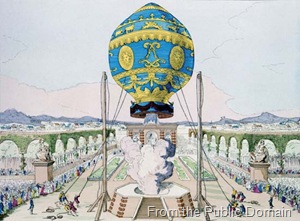
First, the Wright Brothers were not the first to fly.  Now wait a minute.  Before you tar and feather me for heresy, let me explain.  The first recorded manned flight was in 1783 and it was in a hot air balloon built by the Mongolfier Brothers.  On that flight, the pilots achieved a height of approx. 500 feet (~152 m) and traveled a distance of 5½ miles (~9 km) in 25 minutes.  That flight was certainly longer and farther than what the Wright Brothers achieved on their first flight — distance of 120 feet (~37 m) in 12 seconds.

There were others as well who experimented with aerodynamics and flight — Cayley, Penaud, Lilienthal, and Chanute, to name a few.  So, why is it that when one thinks of the first flight, the names that immediately come to mind are of Orville and Wilbur Wright?  It’s because they achieved the first controlled powered flight in a heavier-than-air machine, thus heralding the era of aviation.

Orville at the controls & Wilbur running alongside, the 1903 Flyer soars into the air.
[from the mural in the centennial pavilion on the memorial grounds]

About that second thing to get straight.  Even though the Wright Brothers’ first flight has always been associated with Kitty Hawk, the actual location is Kill Devil Hills, just a short distance down the road.  Back in the time there was nothing but sand dunes between Kitty Hawk and Nags Head.  Today, surrounding the sand dune from which the experimental flights were launched is a town that was incorporated in 1956.

”26 acres of shifting sand” is how Big Kill Devil Hill is described.
Now stabilized, the sand dune supports the monument that honors the wrights.

Here’s a quirky bit of information from the Kill Devil Hills visitor guide, which puts forth two theories on how the town’s name came about.

Legend is that Kill Devil Hills’ name originated many years ago when sailing ships, transporting rum from the tropics to markets in the north, would wreck along the Outer Banks coast. Their cargo would wash up onto the sand hills, sit until found by the local population who would say that the rum was strong enough “to kill the devil.”  Another story about the town’s name comes from a legend involving a local man who, in an attempt to extort money from the devil, entrapped him in a pit at the top of the big hill that is now the site of the huge granite pylon honoring Wilbur and Orville Wright.

Orville and Wilbur  — dedication and stubbornness led to the realization of a dream.
[from an exhibit in the centennial pavilion]

I could write volumes about the achievements of the two men — proprietors of a bicycle shop in Dayton, Ohio — who had a dream: the possibility of human flight.  But others have already done the writing, so I’ll just point you to this Wikipedia post.  Let me also link you to this site, which has a few historic photos of interest.

We arrived at the Wright Brothers National Memorial with $80 clutched in our hands to buy a new annual park pass, but they wouldn’t take our money.  As it turns out, it was National Park Week and entry was free to one and all.  No worries, they’ll get our money at some point.  The hour was early and there weren’t many people around.  By the time the 10:00a Park Service lecture began, it was a whole different story with standing room only in the rather large room.

After briefly perusing the exhibits in the visitor center, we took advantage of the time we had before the lecture to wander over to the First Flight Boulder, which marks the starting point of the four powered-flights that made history on December 17, 1903.  One nearby sign explained that the landing skids of the 1903 Flyer had to be placed on a monorail — the surrounding soil was too soft to launch with conventional wheels.  Another sign brought the first flight alive … in Orville’s words:

The flight lasted only 12 seconds, but nevertheless the first time in the history of the world in which a machine carrying a man had raised itself by its own power into full flight, had sailed forward without reduction of speed, and had finally landed at a point as high as that from which it had started.

Next, we did what almost every visitor to the memorial site does — starting from the boulder, we ran the series of four markers that represent the landing points for the December 17 flights.  Stopping at each marker to read the vital statistics — time in the air, distance, and pilot — we continued to further our “first flight education” and have a bit of fun in the process.

The commemorative boulder, replica monorail, and the markers representing the historic flights.
If you look really carefully at the picture on the right, you’ll see Mui re-creating the flights in one fell swoop by running the path in reverse —  a distance of 852 feet (~260 m).

Short they May have been, but these flights ushered in the era of aviation.

Whenever we visit a national park, if time permits, we participate in the ranger-led programs.  We’ve not been disappointed in one yet; and today’s lecture was no different.  Seated in chairs encircling replicas of the 1902 Glider and the 1903 Flyer, on exhibit in the center of the Paul E. Garber First Flight Shrine (portrait gallery), we listened as the ranger took us back to the time when the Wright Brothers were welcomed to Kitty Hawk with the words: “If you decide to try your machine here, you will find hospitality.”

Indeed, not only were they warmly welcomed, local families and crew members from the nearby life saving stations provided the Wrights with much needed assistance.  Five of these men, in fact, helped move the Flyer to the launch rail and stayed on to cheer as it lifted off the ground on that historic day.  One of them, John T. Daniels, a surfman from one of the life saving stations — a man who had never handled a camera before — had the privilege of documenting the first flight.  It goes to show that being in the right place at the right time counts just as much as knowing how to use a camera.

It wasn’t until the Wrights returned to Dayton and developed the photograph that they saw their first flight captured on film.   Here, Wilbur, who’d been running alongside the flyer as it glided down the monorail, has just let go of the wing as Orville takes to the air.
[photographed from signage on the grounds of the memorial]

The ranger then went onto point out the features of the Flyer.  Wiggling rudders and wings, he explained how over a period of a few years, the brothers mastered the three principles of flight: lift, thrust, and control, and later, mounting a gasoline engine and propellers (both of which they designed to fit their specs), they went onto achieve powered flight.

The 1903 Flyer with the 1902 Glider behind it.

After the lecture, we headed back out again.  It was now considerably warmer, with both the humidity and the temperature rising steadily.  First, we headed to the replica camp where the Wrights lived and worked while they were in Kitty Hawk.  The hangar was empty and didn’t require a lot of time to explore.  The living quarters would have been nice to explore, but a dirty plexiglas door kept us out and we had to be satisfied with a quick look-see.

“We intend to be comfortable while we are here.” —  Wilbur wright, November 1903.

After a quick walk through the Centennial Pavilion, which was quite crowded with visitors seeking both knowledge and a degree of relief from the heat outside, we walked across the area known as the “Field for Flight” to Big Kill Devil Hill to check out the monument dedicated to the Wright Brothers.  Nearby signage provided fascinating information about the 90-foot (~27 m) high hill — once a shifting sand dune — and how it was stabilized with grasses and wood mold before the monument could be built atop it.

Erected in 1932, the 60-foot (~18 m) tall monument is described as a tower “similar to those used to mark courses in air races, embellished with wings on its side, and a five-point star as the base."

Encircling the tower are the words: "In commemoration of the conquest of the air by the brothers Wilbur and Orville Wright, conceived by genius, achieved by dauntless resolution, and unconquerable faith."

Distant glimpse of the replica 1903 Camp; hangar on the left and living quarters on the right.

Following our visit to the monument, we intended to walk to the life-sized First Flight Sculpture, an addition to the memorial grounds for the first flight centennial celebrations.  With our bottles of water nearing depletion, however, we decided it would be wiser to drive instead of walk in the noontime heat.  En route, noticing picnic tables under the trees, we stopped to sate our grumbling tummies with a simple al fresco meal.

can't beat the view from our picnic table.

When John T. Daniels caught the image of the first flight on film, it was from a single perspective — from the back of the airplane.  Since then there have been other depictions of the historic event from other perspectives.  Steven Smith’s 10,000 pound (4,530 kg) stainless-steel sculpture is one of them.  In addition to the Flyer with Orville at the controls, the sculpture includes statues of Wilbur and the five men who were there on that day that history was made.

This was the one place on the memorial grounds where we encountered a whole bunch of rude visitors.  I realize it was fun for kids (and adults) to crawl on and around the sculpture like so many giant ants, but would it have killed them to allow others to photograph the sculpture for a few minutes?  I lost the battle to wait them out and did the best I could under the circumstances.

Mui joins the fray at the First Flight sculpture.

Orville makes history.

John T. Daniels captures a historic photo.

Despite the ant-people, I would have taken a photograph of the entire sculpture, but the light was working against me and the glare was blinding, so I gave up on that idea. Fear not, though, here's a scanned image. What can I say ... beggars can't be choosers.

[scanned from the outerbanks.org guide]

An overall fun day with great educational opportunities to boot — couldn’t have asked for better.

For more pictures, visit my online gallery here.

Wednesday, February 19, 2014

Forked


Tweed Valley greenery
After Saturday's attempted century I will be forced to fork out once again, as my front forks are now totally destroyed. The problem seems to have resulted from wear and tear rather than any specific incident. I now have three weeks to have it ready in time for the Midnight Century -- which I am planning to turn into a 300km ride by riding to the start in Ipswich.
Clouds clearing the ranges behind Tyalgum
The shame of it all was that I had started Saturday's ride in brilliant form in the patchy rain. I had slaughtered the Tomewin climb, and done something similar to the hills en route to Tyalgum. Along the way there had been a few showers, but the temperature was largely cooperating, and I had the pleasure of watching clouds hovering around the surrounding ranges.
Wollumbin National Park
Even after leaving Tyalgum everything seemed to be falling into place. This is the start of the 420 metre climb on dirt roads into Wollumbin National Park. The mud patches made things tricky at times, but generally it was still very negotiable. The forests here take on a whole new quality in the rain, as the lower level eucalypt forests lose some of their hardness, while the rainforest is master when there is moisure in the air.
The banks of Byrill Creek
I descended the mountain and decided to loop around through Byrill Creek and on to Uki for lunch. This was again, a very pretty ride, but these days is subject to this stupid Tweed Shire Council habit of watering dirt roads when it's already raining. Sections of this stretch were like quicksand. These days, however, the dirt doesn't go as far as it used to, and I was back on the sealed roads before the heavier rain started. It was on the seal that I realised the forks were just about history.
I considered my options, at first figuring that if I stayed on sealed roads all the way home, they might hold together. A cross-plank bridge across the Tweed River put paid to that idea, and left me with a 7km walk to Uki to find a telephone. Many times I have sung the praises of the Uki Cafe on various cycling fora over the years, this day was payback time. They were all very friendly while I waited for a ride home. It wasn't really a fitting way to end what had promised to be an epic ride, but it just wasn't to be.
I spent most of last night moping around, and concluded that a mechanical failure like this is even worse than a crash. I'll probably feel differently if I ever crash again (I don't plan on doing so), but either way, abandoned rides don't sit pretty with me. Today I did some minor work on the brakes of The Black Magic, the bike that will probably serve me for the next week or so. I haven't even thought about what the new forks will cost, but I'll likely go for something a little more robust this time around. I also need to use the MTB more often for the dirt. While the hybrid copes more than adequately, perhaps it's not quite up to riding to hell and back.

Tuesday, February 18, 2014

A Recent Getaway

Gayle and I recently went to Raleigh where his company was honoring several of their salesmen for selling the most nation wide.  He was one of them but would never tell you that!  The place where we stayed was called The Umstead.  It was very relaxing and oriental.  I'm not crazy about oriental gardening or decorating.  I do like the big pots in the ground, but that's about it.  One thing I did really like was  how quiet the place was.  Calm music drifted through the restaurants and everywhere else was just really quiet.  
One of my biggest gripes with our present culture is the thought that blaring music needs to be in ALL public places.  Most restaurants are so noisy you have to shout to have a conversation.  Grocery stores  have rock music going so loud I can't even think about what to buy.  There's one exception in our town and that's Bi-Lo.  They play music from the 50-60's, and I find myself singing along (much to Darcie's embarrassment).  I have even been know to throw in a dance step or two.  
As usual, it was nice to get away from my life for a few days.  But coming home is always the sweetest part of a trip.