728*90

Wednesday, November 25, 2015

Spring Moose


I saw my first Moose of today. It was along Highway 1 near Finland, MN. We stared at each other for a couple of minutes before the Moose decided I was of no interest and wandered off into the woods.

Friday, November 20, 2015

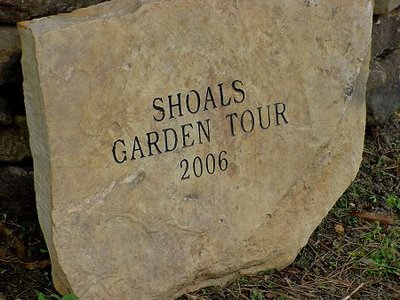
Garden tour


After the gardening conference, we managed to beat the rain and see several gardens on the tour.

This garden, our first stop, turned out to be my favorite. It has its own website. I particularly like the page showing the evolution of the site, which started with some pretty bare bones.

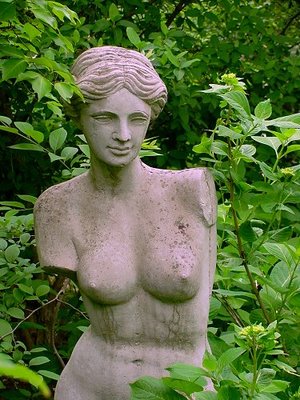
I loved all the beautiful statuary, and the numerous small touches tucked here and there that blended so well with the plants.

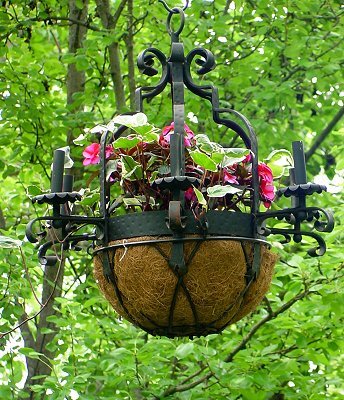
A chandelier hanging basket.

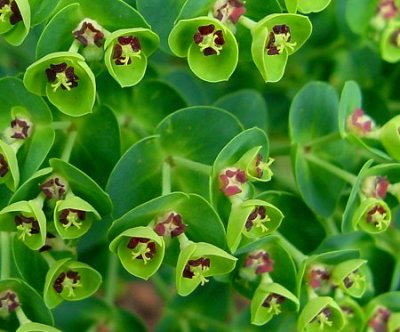
A Euphorbia whose full name I didn't catch.
More later.
-----
Update: I've heard from the gardener himself, and the Euphorbia in question is "Despina". Thanks Phillip!

Wednesday, November 18, 2015

Need to catch up

WOW, where did the week go?
Monday marked 2 weeks of radiation treatments to go. Some recovery time from the Sunday bike ride.
Was going to wait until later in the week to ride again but Tuesday it was just tooooo nice. Upper 60s when I got home from the Med Center. Changed clothes, grabbed the hybrid for a bike ride.
Wind from the WSW. Headed from the bike shop toward the trail center. From there, on up to the Bob Bridge.

The river has receded back into its banks. The new park between the levee and the river is still very wet. The same for the construction area West of the levee. At least the gravel detour just at I-480 is drier and ridable!
From there, it "coasting? with the wind toward Big Lake. Wanted to ride op to Big Lake to see how construction was taking shape. The North lake actually looks like a lake, now! And, the new "boardwalk" is completed and open.

Good job Council Bluffs. Looking good!
From Big Lake, completed my "tour de bluffs" (first for the season) down N. 8th, and through town. On up Harry Langdon, Woodbury, and to the Mall. Back at the Xtreme Wheels, visited for a while.
Off the bike Wednesday - needing a good rest!

Tuesday, November 10, 2015

Successful Procedure


OK, so this photo has nothing about my hospital stay, except its where I would prefer to be - riding my bike at Manawa.
Doc was in to check on me this morning. Everything went well during my "US guided renal biopsy bilateral, renal cyroablation". They feel that they killed the tumor yet not harming the rest of the kidney.
My procedure was done in one of the CT scan rooms. In addition to the CT scan, they brought in an ultrasound machine. The surgeon and his assistant used the ultrasound to locate the kidney and tumor. It was also used to guide the "needle" for the biopsy.
Several trips into the CT scan as they froze the tumor (making sure they froze the whole tumor without damaging the kidney). They gave me some pain meds and some numbing drugs be was basically awake during the procedure. They needed me to hold my breath as they scanned.
The whole procedure was done in under 2 hours. While it was available to me, I did not need any pain medication over night. Slept soundly.
I was impressed with the team that did my surgery. The prep nurse (Nicole?) explained to me exactly what we were doing. Before the procedure started, Doctor Lagrange called "time out" to verify that everyone know who was the patient and what the procedure it was. I raised my hand to verify the patient name. They told me what they were doing, when they were doing it.
Thanks to Doctor Lagrange and the team.
Back in my room (they moved me to a different room, a quieter room) I was restricted to bed for 2 hours. Withing 4 hours, I eat a snack and was ready for my first post-surgery walk.
Now, we await the biopsy results and raising my INR number. Hoping to be released Friday or Saturday.

Bosque del Apache


From the "Friends of the Bosque" website (http://www.friendsofthebosque.org/):
"The Bosque del Apache National Wildlife Refuge in New Mexico is an important wintering home for Sandhill Cranes and hosts as many as 14,000 cranes during the winter months. The Bosque is located along the Rio Grande River south of Albuquerque and provides critical habitat for cranes and other migratory birds such as over 32,000 Snow Geese, dozens of Bald Eagles, Avocets and many other birds. The beautiful refuge is also home to small herds of Mule Deer and families of Coyotes. Seeing the sunset "fly-in" and the sunrise "fly-out" is an experience you will never forget!"

Above: "Blue morning at Bosque" - An overcast, snowy, predawn morning makes for a dramatic image of these Sandhill Cranes.
After leaving Yosemite the next stop on my trip was to be Bosque del Apache in New Mexico. The plan was to meet back up with my friend Roger (http:www.rogernordstromphoto.com) in Socorro then head to the refuge the next morning. For those of you that have been following along with my blog, Roger and I started off my trip together with a visit to the Badlands and Black Hills of South Dakota. After that portion of the trip Roger had to head back home, but I continued on my journey and here we are meeting back up again near the end of my trip! Roger was visiting his family in California for Christmas, so he stopped in New Mexico to meet up with me on his way back home.
I arrived in Socorro with enough time to head to the refuge for sunset (Roger wouldn't be arriving for several more hours). Not long after arriving at the refuge I was a little disappointed at the lack of birds. I had visited Bosque back in 2004 during this same week, and remembered seeing LOTS of cranes, and LOTS of snow geese. This time, there were only a few. Oh well, I figured... maybe it was just an "off" night, and more would be around tomorrow.


Above: "Red-Winged Rush" - While driving the roads of the refuge, we spotted this large group of Red-Winged Blackbirds that was flying around one of the fields... they would fly around a bit, then land for a moment, then fly around again. I've never seen so many Red-Winged Blackbirds at one time before. Luckily I had my camera and telephoto lens ready to capture this rush of birds!
The next morning we rose bright and early so we could take advantage of the nice breakfast that was offered at our motel. If you're ever looking for a place to stay in Socorro, I highly recommend the EconoLodge... VERY reasonable rate, the room was spacious and very comfortable, the staff was friendly and they had one of the best breakfasts of any motel I've ever stayed in. Coffee, juice, bagels, waffles, cereal, fresh fruit.... it was a great way to start the day!

Above: "Coyotes on the prowl" - A pair of coyotes working their way along the edge of one of the fields. There was a group of snow geese out in the middle of this field, several hundred yards away from these coyotes. The coyotes had their eyes on the birds... not sure if they got any or not, as they ducked into the brush and I never saw them again.

Above: "Safe Zone" - A group of Canada Geese along with a few Sandhill Cranes rests in a field. The fields provide food and a modicum of protection from coyotes, their main predator at the refuge. The birds are usually clustered in the middle of these fields, so they can see the coyotes coming in time to take off and avoid being caught by one.
After breakfast we hit the road for the refuge, which is about a 25 minute drive from Socorro. It started snowing not long after we got on the freeway. Hmmmm.... probably not going to be much of a sunrise, we thought. We were right about that... no sunrise, it was too cloudy. The snow kept coming down, and at times quite heavily. It ended up being a wonderful morning, with the fresh snow providing a perspective on the refuge that not many people are able to enjoy. Being that this is a desert, they don't get much rain or snow. It was a rare treat. Throughout the morning we saw many small groups of birds but as the day progressed we would see more and more. We spent several days at the refuge, and by the time we left we were quite happy with the birds we had seen.


Above and below: These cranes were out for a morning walk on one of the frozen ponds. After watching them for about a half hour, they began to take off one by one from the ice.

Bosque del Apache was my first exposure to Sandhill Cranes and Snow Geese. Before my visit in late 2004, I had never seen either of these birds. Since then, I have been to Nebraska several times to witness the massive gathering that occurs there every spring. Sandhill Cranes are amazing birds, and I don't think I will ever tire of seeing them. Sandhill Cranes have one of the longest fossil histories of any existing bird. The oldest Sandhill Crane fossil is about 2.5 million years old, over one and a half times older than the earliest remains of most living species of birds!
If you'd like to see some more images of Sandhill Cranes, please visit my blog entries from Nebraska in March of :
http://travisnovitsky.blogspot.com//04/sandhill-cranes-on-platte-river.html
and from March of :
http://travisnovitsky.blogspot.com//03/gathering-on-platte-river.html


Above and below: Experimenting with some slower shutter speeds, trying to "blur" the wings of snow geese as they flew into the refuge at sunset.


Above: Two cranes out for an evening walk.

Above: "Flight Training" - This trio of snow geese flew over us several times as they looped around the farm deck field. Most of the time it seemed as though the two geese behind were chasing the one in the front. I joked with my friend Roger that the one in front was probably the "flight instructor", and was teaching the two behind him how to follow and stay in formation :-)

Above: A typical "blast-off" of Snow Geese at the refuge. When the geese fly out from the refuge, they usually do so in one large group. When an entire field full of these birds decides to take flight all at the same time, it is quite a sight to see. Its also really something to hear the birds when they all take flight. The whole experience is unforgettable. To see a short video of one of the morning "blast-off" events, click this link to my main website:
http://www.travisnovitsky.com/Video-Clips/Misc-Videos/4207197_KrddQ/1/756102917_Wdjg4/Medium
Below: Sunset over one of the irrigation canals at the refuge (the two lights are the headlights of a vehicle approaching on one of the refuge roads). The staff at the refuge use these canals to divert water from the Rio Grande into the fields at the refuge, creating prime habitat for the birds. If you're into wildlife, you should put a visit to Bosque del Apache at the top of your list!

Saturday, November 7, 2015

Another Bike!?


I have been thinking of getting a road bike. Last year I was pounding the pavement a lot. Started looking at a different ride than the Trek FX (hybrid).
This morning I rode from Xtreme Wheels to Margaritaville on the hardtail. On the way down the hill, I decided to talk with Blaine about a road bike. He had a Gary Fisher Rail in my size (55cm).
Now, I had never ridden a road bike. Once again, the shifting is new to me. It will take some time to get used to it. But, nothing I can't master. The great part of it was the bike geometry was perfect for me.
I felt very comfortable in the riding position. Actually can see better and puts less strain on my neck than the hybrid.
We got down the nitty-gritty. I asked about the components of that bike based on my weight and riding style. Blaine recommended that I consider a shifter upgrade with the miles I put on a bike. I requested a triple ring gear, because with the 3 ring gear "grandma" is a little too fast.
So, I now have a road bike on order. Its not a "Trek" but in the Trek family. White Fisher Rail Super T. The only color is comes in is White. So I will HAVE to ride the same color Fisher bike as Zach! A small price to pay for a bike that fits me to a "T".

Wednesday, November 4, 2015

Reflections on the GLSKS "one coach track"

At this year's Great Lakes Sea Kayak Symposium, we had the opportunity to work with students who signed up for the "one-coach track." This meant each of us worked with five students for the entire weekend, rather than being assigned to teach a series of two-hour skills sessions with an ever-changing group of participants who signed up for each of those courses.

We chose the one-coach track because we were interested in working on a progression -- one of our responsibilities as BCU Coach 2 trainees. But we did so with some regrets because it meant we wouldn't have the opportunity to work with other coaches and participants at the symposium. We'd be off on our own little learning island.

It turned out to be a terrific opportunity. We began by discussing their goals and then videotaping each of the 10 participants performing a set of two-star skills: efficient forward paddling, moving sideways, maneuvering in a small space, and performing a low brace.


Some of the participants in our one-coach track watching their videotaped performance as Alec offers observations.

Over the course of the next two and a half days, we were able to help them improve those skills. We began with the fundamentals: posture, connectivity, power transfer and feel. We then applied those and other concepts to everything from the forward stroke and edged turns to bracing and rescues. Our standard for everything was "safe, effective, efficient," enabling them to understand why particular approaches make the most sense and to choose what works best for them.

Thanks to the weather, the course culminated in taking those skills into bumpy water for a real-world application. Finally, we videotaped again, allowing our students to see how much they had progressed. It was a rewarding weekend for all of us.


One-coach participants testing their skills in bumpy water.
The one-coach track allowed us the freedom to work on skills without feeling the two-hour clock ticking, to establish a well-paced progression, and to provide varied practice over two and a half days. In the end, if was a more optimal learning experience for them, and a more satisfying coaching experience for us.


The 10 participants and two coaches from this year's one-coach track.